

Archive Story:
Expansionist Eruptions
Volcanic force and the Tao of renewal.
Archive Story: Expansionist Eruptions
In 1976, Vivian Springford titled a work La Grande Soufrière — the name of a volcano in Guadeloupe that erupted that same year. Whether she stood at its base or carried the vision from memory, the event left an indelible mark. The force of that eruption transformed her art.
What had once been still pools began to ignite. Circular forms fractured into plumes and bursts; colors collided with explosive energy. Across canvas after canvas, pigment moved like smoke through air — fiery reds flaring against black, radiant veils dissolving into ash. In one painting, the violence subsides into a strange calm: Thrice a Blue Moon, its title drawn from the phenomenon when volcanic dust scatters light so that the moon appears blue.
The Expansionist paintings marked a threshold in Springford’s work. Pools gave way to eruptions, serenity to upheaval. She had turned the landscape inward, translating the earth’s combustion into gesture — the Tao in its most dramatic form, where creation and destruction coexist.
For Springford, eruption was never an ending but a passage. Like Taoist cosmology, it was the cycle made visible: dissolution as renewal, the moment where fire becomes air and matter returns to flux.
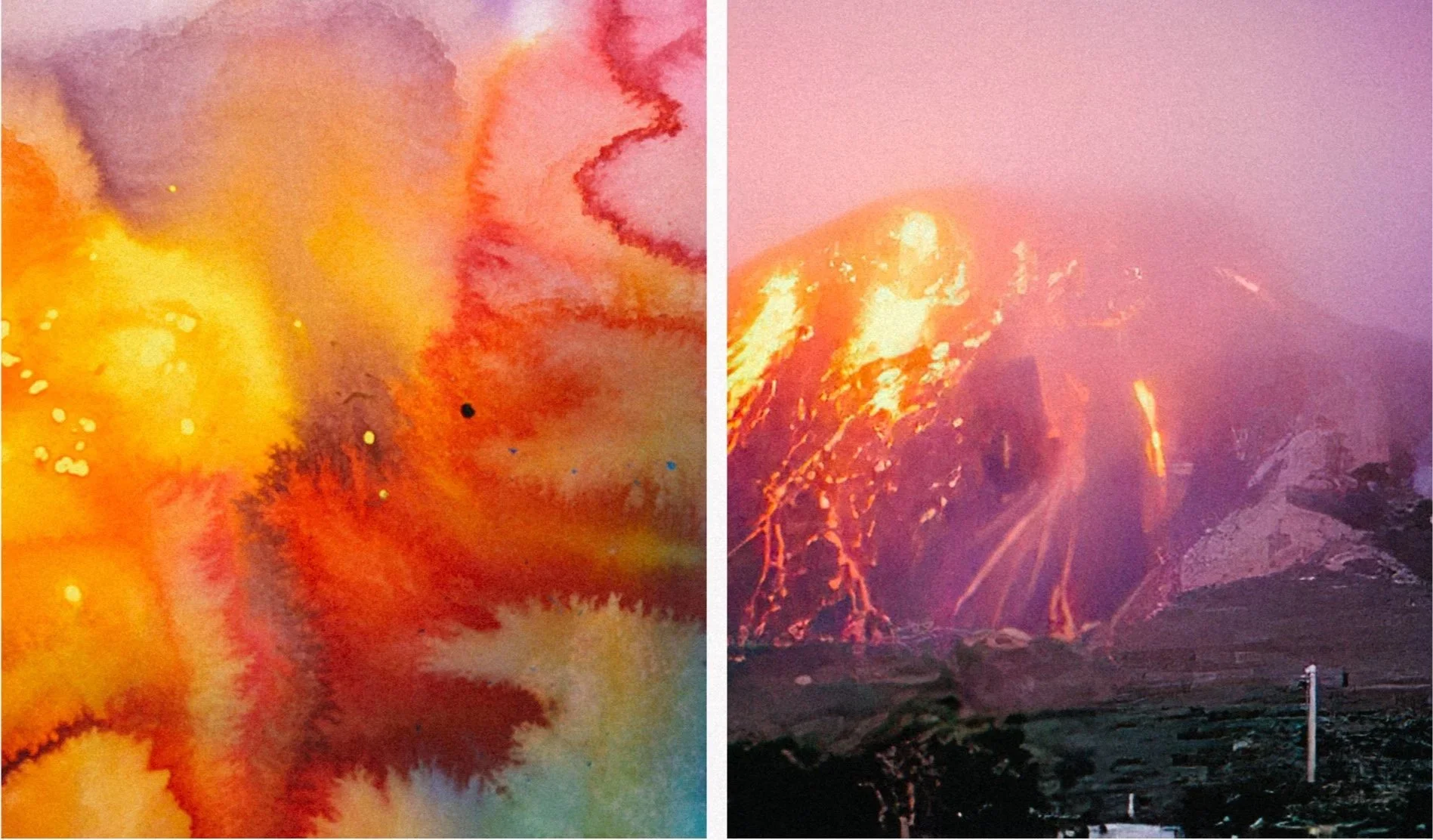
La Grande Soufrière, 1976, Acrylic on paper
Titled after the eruption of La Grande Soufrière volcano in Guadeloupe in 1976, this work marks the beginning of Springford’s Expansionist series. The composition reflects a decisive shift from contained circular forms toward outward force, fragmentation, and atmospheric dispersion.
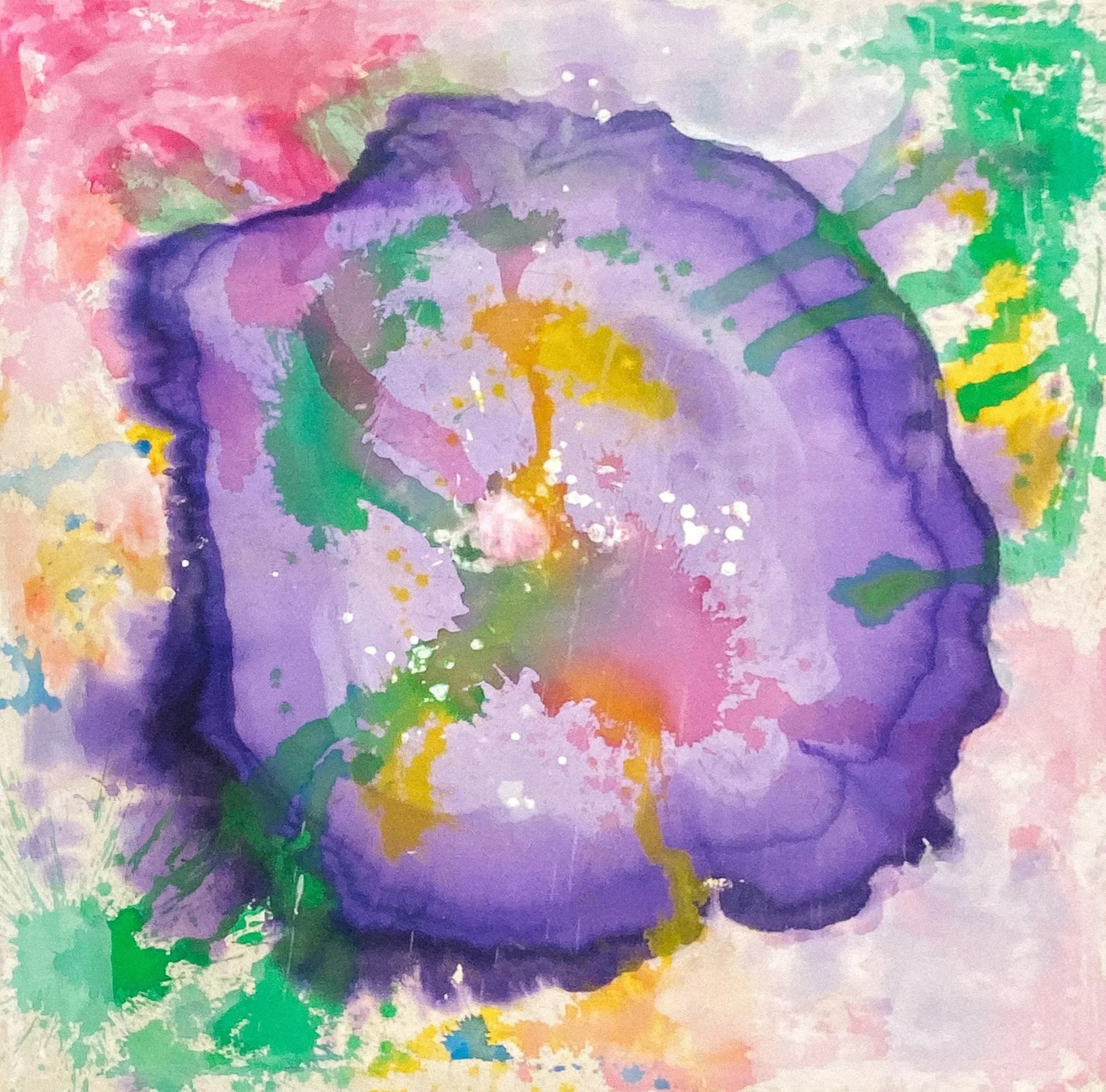
Untitled (Expansionist Series), 1976–1978
Created in the period following the 1976 eruption of La Grande Soufrière, this work belongs to Springford’s Expansionist series, in which volcanic eruption informed both imagery and compositional structure.
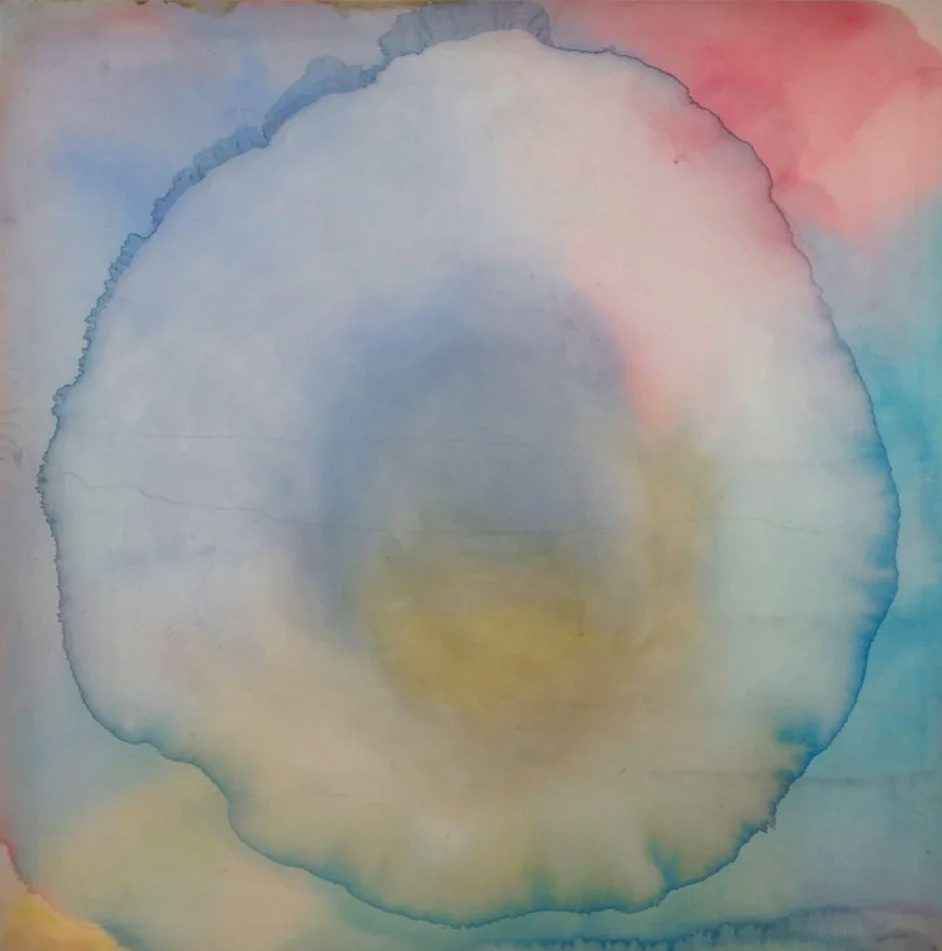
Thrice a Blue Moon, 1977–1978
Named for a post-eruption atmospheric phenomenon in which volcanic ash alters lunar color, this work reflects Springford’s sustained engagement with volcanic imagery in the years following the 1976 eruption of La Grande Soufrière. The painting records not the eruption itself, but its residual effects — diffusion, suspension, and altered light.